
Advanced Analytics
Data Fusion
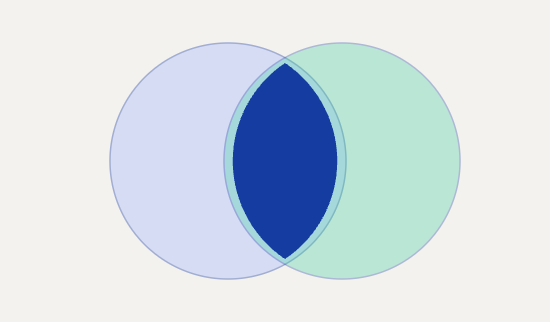
Combine datasets that have never been connected, unlocking insights impossible from either source alone.
Benefits
Your data holds more answers than you think
Maximises existing data assets
Puts the surveys, CRM and behavioural data you already own to work, extracting answers they were never originally collected for.
Reduces research costs
Answers new questions without commissioning fresh fieldwork, by joining sources you’ve already paid for.
Enables cross-dataset insights
Links attitudes, behaviours and outcomes that live in separate datasets into one connected view of the customer.
Nº 2 · The method
What is data fusion?
Most organisations hold multiple research assets that were never designed to work together. Data fusion changes that by combining separate datasets into a unified view that unlocks insights impossible from either source alone, without the cost or complexity of commissioning new research.
Data fusion is a statistical technique that combines two or more datasets that share no direct link, creating a unified dataset with variables from both sources. It works by identifying common variables across datasets, such as demographics, behaviours, and attitudes, and using them as a bridge to build statistically matched records that preserve known relationships.
The result is the ability to analyse connections that were previously invisible. How do brand attitudes translate to actual purchase behaviour? How does media exposure relate to both satisfaction and spend?
Questions like these would otherwise require prohibitively long surveys or entirely new research programmes. Fusion makes them answerable to the data you already hold.
When to use it
When your data is richer than your reports suggest. Data fusion is most valuable for:
01
Linking brand tracker data to purchase behaviour or CRM transaction records
02
Combining media consumption data with product usage or satisfaction measures
03
Connecting customer satisfaction surveys with financial performance data
04
Fusing multiple brand tracker studies to create a single continuous view
05
Integrating third-party data sources with proprietary research
06
Enriching panels with additional behavioural or attitudinal attributes
Decisions
Decisions it supports
Data fusion is most valuable when the answers you need sit across unconnected datasets. By linking attitudes to behaviours, perceptions to outcomes, and exposure to action, it gives you a complete picture that neither dataset could provide on its own.
01
Proposition
- Stated preferences and actual purchase behaviour rarely tell the same story. Fusion reveals the gap, showing how claimed importance translates to real usage, which features genuinely drive purchase decisions, and what the relationship between perceived value and buying behaviour actually looks like
02
Brand
- Understanding how brand attitudes translate to actual purchase behaviour, and what the real return on brand investment looks like in sales terms, requires data that most brand trackers and sales datasets hold separately. Fusion connects them, revealing which brand perceptions drive loyalty and repeat purchase, and where investment is genuinely paying off.
03
Customer
- Satisfaction scores tell you how customers feel. Behavioural data tells you what they do. Fusion connects the two, showing how satisfaction links to retention, identifying which customers are at risk based on both attitudes and actions, and mapping the complete journey from awareness through to purchase and advocacy.
04
Communications
- Understanding the path from media exposure to purchase requires data that rarely resides in a single place. Fusion connects it by linking advertising exposure to brand perception, tracking the path from awareness to action, and identifying which campaigns drive both attitude change and behavioural outcomes
How it works
Five steps from multiple files to one view.
Conservative by design, we surface what the fusion can and can’t do as part of the deliverable.
STEP · 01
Assess
We identify the common variables between the two datasets and define clear fusion objectives before any work begins.
STEP · 02
Prepare
Variables are harmonised, coding is standardised, and data quality is validated across both sources to ensure a sound foundation.
STEP · 03
Match
Statistical techniques are applied to find the strongest possible record matches between datasets, based on the common variables identified at the outset.
STEP · 04
Validate
We confirm that known relationships are preserved and that the unified dataset maintains the integrity of both sources before anything is signed off.
STEP · 05
Deliver
You receive a clean, fully documented, validated, clearly structured, and ready-for-analysis dataset.
Getting started
What you need to begin
- Two or more datasets with credible shared variables
- A clearly defined use-case for the fused asset
- Common variables present across both, ideally 5–15, including demographics, behaviours, and attitudes.
- Clear fusion objectives and any known relationships that must be preserved.
FAQ
Frequently asked questions.
Accuracy depends on the strength of common variables. When datasets share strong common variables, fusion typically preserves 80–95% of known relationships. Perfect accuracy is not possible. We are inferring relationships statistically, not directly observing them. Well-executed fusion provides reliable intelligence for business decision-making.
The more common variables, the better. Ideally, 5–15, including demographics, key behaviours, and attitudes. Stronger, more discriminating common variables produce better fusion. We assess common variable strength and advise on viability before proceeding.
Yes, sequentially, building progressively richer combined datasets. Each additional fusion introduces some statistical error, so we typically recommend limiting to 2–3 datasets and validating carefully at each stage.
Constrained fusion preserves the marginal distributions of variables being fused, keeping population-level statistics accurate. Unconstrained fusion focuses on finding the best individual-level matches without preserving marginals. We select the approach based on whether you need population estimates or individual-level analysis.
Use fusion when combining existing datasets is more cost-effective than new research, when questionnaire length would be prohibitive, or when datasets come from sources that cannot be combined in a single study. Collect everything together when you need the highest accuracy or when the relationship between datasets is itself the primary research objective.
Get in touch
Ready to run a data fusion project?
If you want to connect your data and unlock insights you can’t see today, we can help. Get in touch to discuss your brief.