
Advanced Analytics
Eye Tracking & Visual Analysis
See what captures attention, not what people say they notice
Benefits
Captures attention the way it actually happens
Measure real attention
Captures where people actually look, rather than what they claim to notice, using their unprompted gaze.
Reveal what’s seen and missed
Shows exactly which elements draw the eye and which are skipped entirely within the first few seconds.
Improve visual performance
Pinpoints where to place the messages and cues that matter so the design earns attention where it counts.
The method
What is eye tracking and visual analysis?
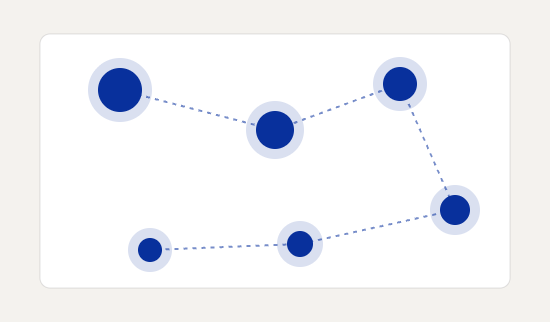
Eye tracking measures where people look, in what order, and for how long. Visual analysis complements this by interpreting patterns of attention to understand how content is processed.
Together, they move beyond stated feedback to capture real behaviour. People are often unaware of what they notice or why they make certain choices.
Eye tracking shows what is seen. Visual analysis explains how that attention translates into understanding, engagement, and action.
The result is a clear view of how visual stimuli perform in context, from packaging and shelf layouts to websites, advertising, and interfaces.
When to use it
Eye tracking and visual analysis are most valuable when visual attention plays a critical role in performance.
01
Packaging and shelf standout analysis
02
Website and app usability testing
03
Advertising and creative evaluation
04
Ecommerce page optimisation
05
User interface and experience design
06
In-store and digital journey analysis
Decisions
Decisions it supports
Eye tracking provides evidence for decisions where attention, clarity, and visual hierarchy determine success.
01
Proposition
- Are key features, benefits, and messages being seen and understood?
02
Brand
- Does the brand stand out?
- Is it seen quickly and clearly in competitive environments?
03
Customer
- How do people navigate visual content?
- What do they notice first, and what do they miss?
04
Communications
- Do creative assets capture attention and communicate effectively?
- Are key messages landing as intended?
How it works
Five steps from stimulus to creative decision.
Disciplined design, calibrated capture, attention-level metrics translated back into briefs.
STEP · 01
Define stimuli
Select the visual materials to test, such as packaging, ads, websites, or interfaces.
STEP · 02
Capture attention
Use eye-tracking technology to record where respondents look, in what order, and for how long.
STEP · 03
Analyse patterns
Identify areas of high and low attention, scan paths, and points of friction or confusion.
STEP · 04
Link to outcomes
Connect attention patterns to behaviour, such as choice, recall, or task completion.
STEP · 05
Deliver insights
Provide clear visual outputs, including heatmaps and gaze plots, alongside recommendations for optimisation.
Getting started
What you need to begin
- The stimuli at final or near-final fidelity
- A clear definition of success: branding, comprehension, conversion
- Target audience and exposure context
- Any creative variants you want compared
FAQ
Frequently asked questions
Eye tracking measures actual gaze behaviour from respondents on an individual level. Heatmapping can be derived from eye tracking or through page interactions like clicking or tapping within an image or video.
There can be a small awareness effect, but well-designed studies minimise this. In most cases, behaviour remains natural enough to provide reliable insight into attention patterns.
Yes. Our approaches allow eye tracking via webcams or phone cameras, enabling scalable, cost-effective studies without specialist lab setups.
Typical outputs include heatmaps, gaze plots, attention timelines, and clear diagnostics showing what is seen, in what order, and what is missed.
Eye tracking is most powerful when linked to behavioural data such as choice, recall, or conversion. This shows not just what is seen, but what actually drives action.
Get in touch
Ready to run an eye-tracking project?
If you want to see what customers actually notice and respond to, we can help. Get in touch to discuss your brief.
Related